If you want your Bloomingdale home to stand out, you do not need a full remodel. You need a home that feels bright, calm, and easy to understand the moment a buyer sees it online. For many sellers, that is a relief, because the right staging plan is more about presentation than major spending. Let’s dive in.
Why staging matters in Bloomingdale
Bloomingdale is a homeowner-heavy community in DuPage County, with a 2025 population estimate of 22,476, an owner-occupied housing rate of 74.6%, and a median owner-occupied home value of $376,500. In a market like this, thoughtful presentation can go a long way because many buyers are comparing well-kept suburban homes and looking for spaces that feel move-in ready.
Staging helps buyers picture how a home lives. According to 2025 staging research from the National Association of Realtors, 83% of buyers’ agents said staging made it easier for buyers to visualize a property as a future home. That same research found 49% of sellers’ agents said staging reduced time on market, while 29% said it increased the dollar value offered by 1% to 10%.
That does not mean you need to chase trends or over-design every room. The goal is to make your home feel clear, cared for, and photo-ready so buyers can focus on the space itself.
Think photo-ready, not renovated
One of the biggest staging myths is that you need to renovate before you list. In reality, staging is about decluttering, styling, and creating a neutral backdrop that helps buyers notice your home’s strengths.
That matters even more because most buyers start online. In NAR’s 2025 Home Buyers and Sellers Generational Trends report, 83% of buyers said photos were a very useful feature in their online search process. If your home reads as dark, crowded, or visually busy in photos, you may lose interest before a showing is even scheduled.
A design-minded staging plan keeps asking one question: Will this room make sense in a listing photo? If the answer is yes, you are usually on the right track.
Stage the rooms that matter most
Not every room needs the same level of effort. If you want to prioritize your time and budget, start with the rooms buyers notice most.
According to NAR’s 2025 staging research, the most commonly staged rooms were:
- Living room
- Primary bedroom
- Dining room
- Kitchen
These spaces often shape a buyer’s first impression of the home. They also tend to do the most work in listing photos, where layout, light, and flow need to feel obvious right away.
Focus on the living room
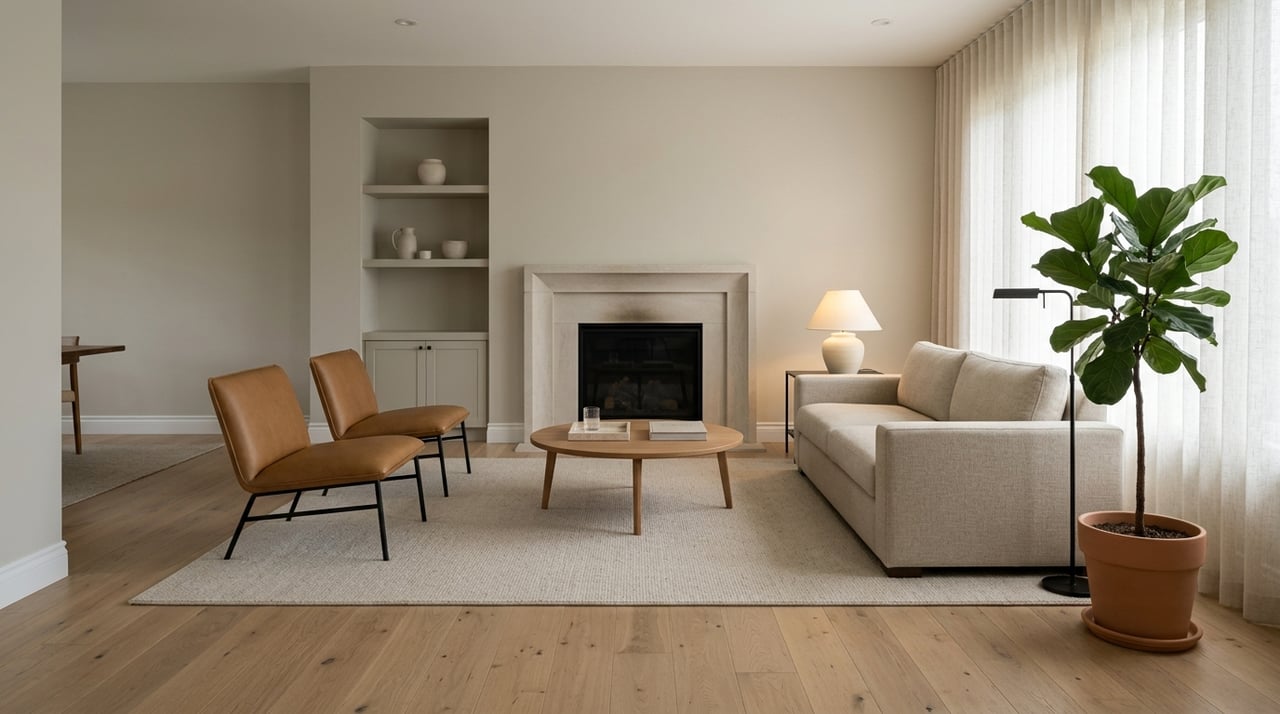
The living room often sets the tone for the entire home. It should feel open, balanced, and easy to move through.
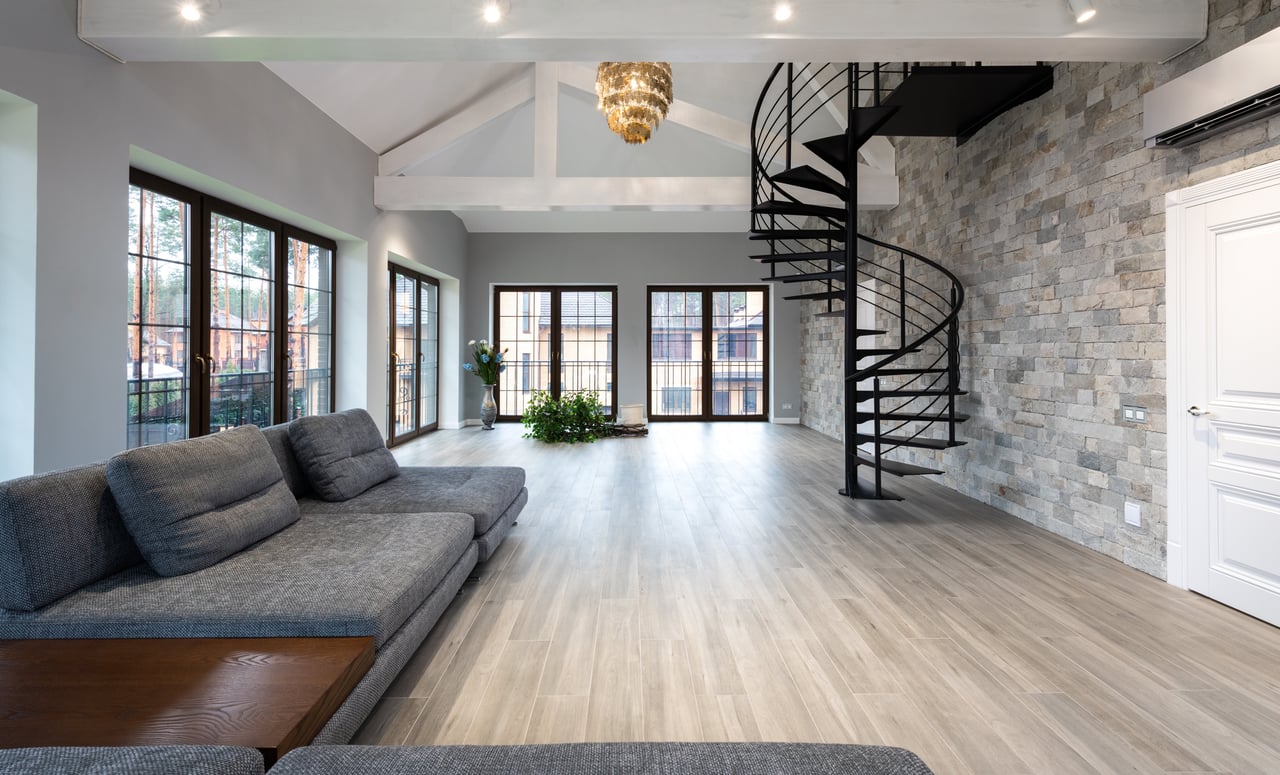
If the room is crowded, remove extra pieces first. A smaller, simpler furniture grouping can make the space feel larger and more functional than a room packed with oversized seating.
Calm the primary bedroom
Your primary bedroom should feel restful and spacious. That usually means clean bedding, limited decor, clear surfaces, and enough space around the bed for the room to breathe.
If the furniture feels too heavy for the room, consider removing one or two pieces. Buyers should notice the room size and natural light before they notice your furniture.
Simplify the dining room
A dining room does not need to look formal to look polished. It just needs a clear purpose and good proportions.
Keep the table centered, remove extra chairs if needed, and use one simple focal point. For photos, less is often more.
Edit the kitchen
Kitchens photograph best when counters are mostly clear and finishes are easy to see. Remove small appliances, stacks of mail, and anything that makes the room feel busy.
This is also a good place to look at lighting. A bright kitchen with consistent bulb color tends to feel cleaner and more current in photos.
Use the design levers that change everything
The best staging results usually come from a few practical choices, not from expensive upgrades. In Bloomingdale, these are the details worth getting right before you list.
Improve lighting first
Lighting has a huge effect on how your home feels in person and on camera. NAR recommends cleaning windows and screens, replacing burned-out bulbs, and using lighter window treatments to help more light into the home.
Try to keep bulb color consistent from room to room. Mixed light temperatures can make a home feel chaotic, while even lighting helps rooms look brighter, cleaner, and more cohesive.
Fix furniture scale and flow
Furniture should help define a room, not fight it. NAR notes that furniture that is too large can make a room feel smaller, while furniture that is too small can make it feel empty.
You also want clear pathways. Avoid blocking doorways, keep windows accessible, and arrange pieces so each room’s purpose is obvious at a glance.
Keep the palette restrained
For broad appeal, a neutral base still works best. Soft white, beige, and gray can help your home feel fresh without making it feel too personalized.
If you want color, use it in small accents rather than permanent choices. A restrained palette gives buyers a cleaner mental picture of how they might use the space.
Tell one style story per room
A room photographs better when it has one clear mood and one clear function. NAR’s guidance for staging a home for photos recommends keeping a single color story per room and using furniture to show scale while helping light move through the space.
That means cutting visual competition. If a room has too many accent colors, patterns, or mismatched finishes, it can look smaller and more distracting in photos.
Avoid the most common staging mistakes
A lot of staging problems come from trying too hard or not editing enough. Buyers do not need a perfect home. They need a home they can understand quickly.
Before listing, watch for these common issues:
- Overfilled rooms with too much furniture
- Bold paint or decor that dominates the space
- Cluttered entryways
- Packed closets and cabinets
- Personal photos and large collections on display
- Dark corners and mismatched lighting
When in doubt, simplify. A room that feels open and intentional usually makes a stronger impression than one that feels fully decorated.
Give curb appeal equal attention
The first showing often happens from the street or on a phone screen. That is why exterior presentation matters just as much as the living room.
NAR defines curb appeal as how a home looks from the street and notes that landscaping updates or paint can improve first impressions. Its consumer guidance also cites research suggesting strong curb appeal can raise perceived value by as much as 7%.
Prioritize the front approach
For Bloomingdale sellers, the most effective exterior updates are often the simplest ones. Clean the front walk, trim landscaping, and make the entry look neat and welcoming.
Pay attention to what shows up in exterior photos. Your front door, porch, and house numbers should all read clearly and look maintained.
Check outdoor lighting
If showings may happen later in the day, outdoor lighting matters. NAR highlights landscape lighting and illuminated address plaques as curb-appeal tools that can improve visibility and presentation.
Make sure the porch light works, the path feels easy to follow, and the address is easy to read at dusk. These are small details, but they help your home feel cared for.
When virtual staging makes sense
If your home is vacant or has an awkward layout, virtual staging can be a useful tool. It can help buyers understand room scale and see how a space might function.
That said, it needs to stay believable. NAR cautions that virtual staging should not misrepresent a home’s size or condition, so it works best when it clarifies the space rather than oversells it.
For some Bloomingdale listings, virtual staging is a smart supplement. It is not a substitute for accurate presentation, clean photos, or honest marketing.
A practical staging checklist before listing
If you want a simple plan, start here:
- Clean windows and screens
- Replace burned-out bulbs
- Use matching light temperatures where possible
- Remove excess furniture
- Clear kitchen and bathroom counters
- Declutter closets and cabinets
- Store personal photos and collections
- Use a neutral, consistent color story
- Refresh bedding and soft goods if needed
- Clean the front walk and entry
- Trim landscaping
- Check porch lighting and house numbers
This kind of prep is often low-risk and high-visibility. It helps your home show its best features without turning the pre-listing process into a renovation project.
Design-minded staging is really about clarity
The homes that tend to connect fastest with buyers are not always the most updated. Often, they are the ones that feel the easiest to read. The layout makes sense, the light feels even, the style is calm, and the photos create confidence before a buyer ever walks in.
That is the heart of design-minded staging for Bloomingdale sellers. It is not about making your home look trendy. It is about helping buyers see its space, function, and potential clearly from the first photo to the final showing.
If you are getting ready to sell and want practical guidance on what to edit, what to keep, and what will matter most before your home hits the market, Kari Wilson is here to help with thoughtful, service-first support.
FAQs
Which rooms should Bloomingdale sellers stage first?
- Start with the living room, primary bedroom, dining room, and kitchen, since these are the rooms most commonly staged and often the most important in listing photos.
How much paint or decor should sellers use before listing a Bloomingdale home?
- Keep the overall palette neutral and restrained, then use small accents for color so the home feels polished without becoming over-styled or too personal.
Is virtual staging a good option for vacant Bloomingdale homes?
- Yes, virtual staging can help buyers understand scale and function in empty rooms, but it should stay accurate and should not misrepresent the home’s condition or size.
What exterior updates matter most before listing a Bloomingdale property?
- Focus on simple, visible improvements like cleaning the front walk, trimming landscaping, refreshing the entry, and making sure the porch lighting and house numbers are easy to see.